

For adults, therapy often brings to mind conversation — sitting together and talking through thoughts and feelings. For children, however, communication does not always happen primarily through words. Play is their natural language.
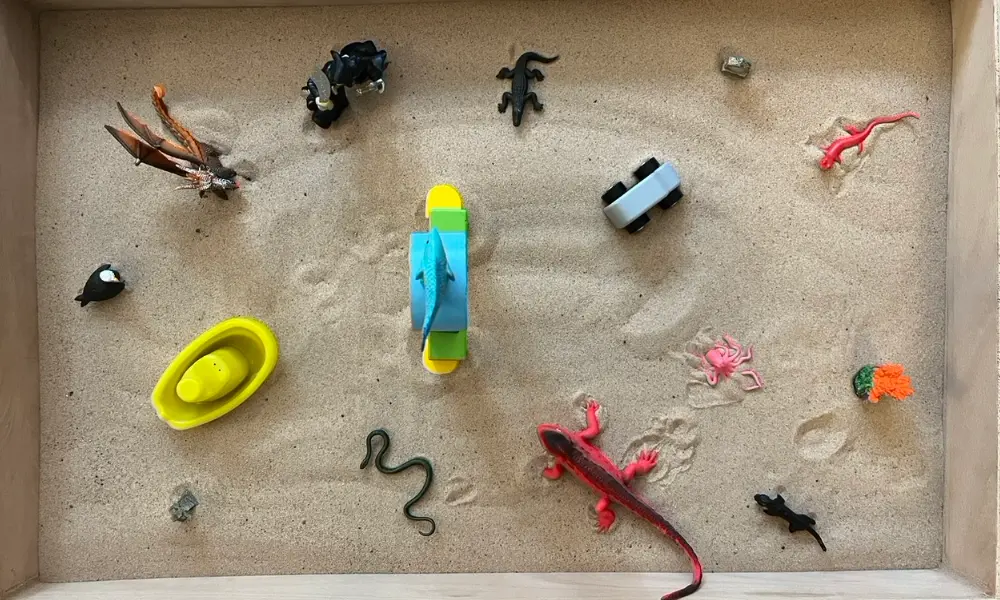
When children engage in imaginative play, drawing, sand tray work, storytelling, modelling or puppetry, they are often expressing experiences symbolically. A child may use a superhero story to explore feelings of powerlessness. A scene created in the sand may reflect conflict, fear or hope. Through metaphor and imagination, children can express complex emotions in ways that feel safer and less overwhelming than direct conversation.
Play creates emotional distance. It allows a child to approach a difficult feeling gradually, controlling how much they reveal and when. This sense of control is particularly important when a child has experienced anxiety, change or uncertainty. The creative process helps regulate emotions, build problem-solving skills and strengthen a sense of agency.
Importantly, play-based therapy is not simply unstructured activity. It is a thoughtful and attuned process. The therapist observes themes, patterns and emotional shifts within the play, gently reflecting back what may be emerging. Over time, children begin to recognise and organise their inner experiences. They develop language for feelings and greater confidence in expressing themselves.
Creativity can also support children who struggle to verbalise emotions due to age, temperament or neurodiversity. Some children feel pressure when asked direct questions about how they feel. Play removes this pressure. It meets the child at their developmental stage, respecting how they naturally process the world.
While play is central for younger children, creative expression can benefit adolescents and adults as well. Art, metaphor and imagery can bypass intellectual defences and access deeper layers of emotion. Creativity invites curiosity rather than judgement.
Within a relational and systemic framework, play can also reveal patterns that exist beyond the individual child. Themes of conflict, rescue, isolation or teamwork may reflect experiences within the family or peer group. Exploring these gently can open conversations that lead to greater understanding and connection.
Valuing play as meaningful communication shifts the way we view children’s inner worlds. It reminds us that beneath behaviour and imagination lies important emotional information. When children are given space to express themselves creatively, they often feel deeply seen and understood — sometimes for the first time.